
Language learning can fail before learning begins.
The Problem
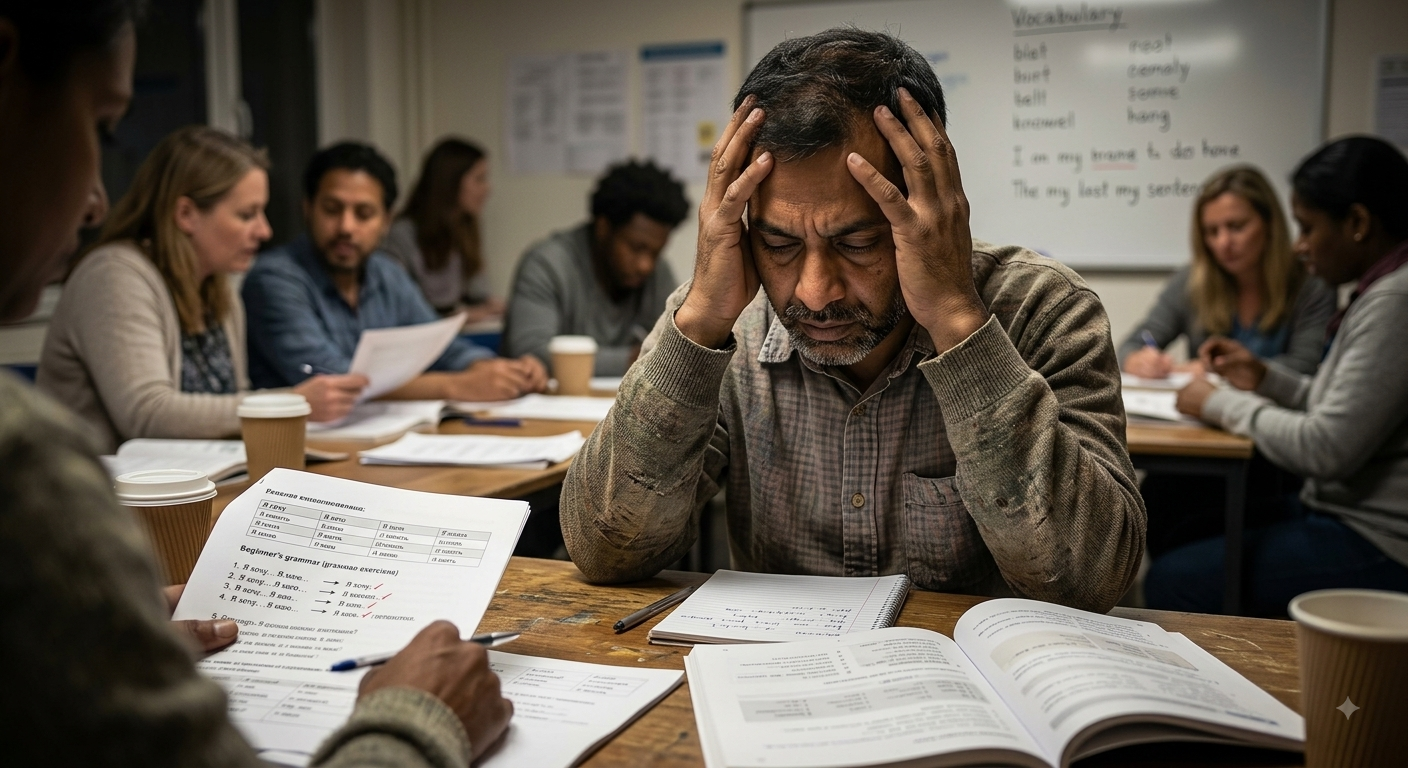
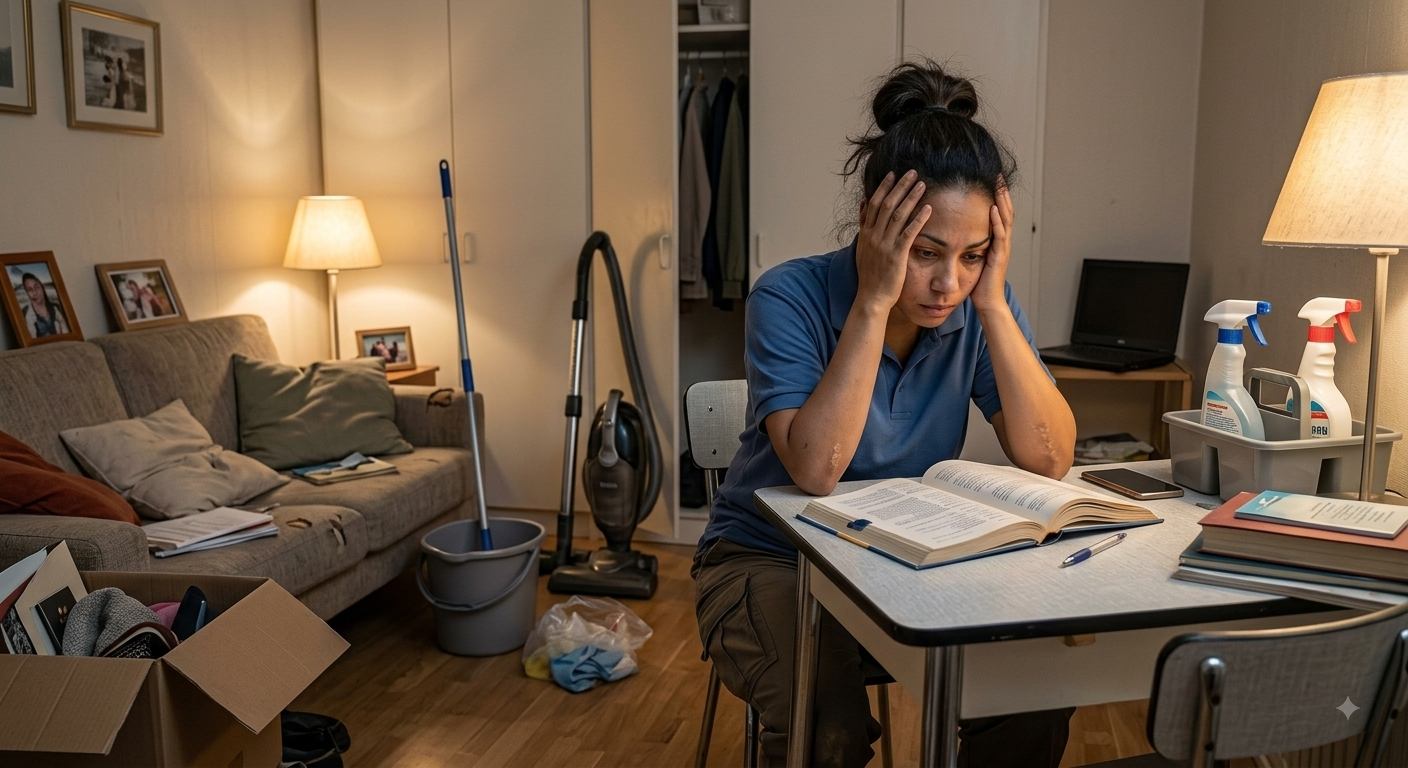
For a newcomer, language is not simply another subject to study. It shapes access to work, education, public services, relationships, and independent participation in everyday life.
Yet migration can create exactly the conditions under which learning becomes harder to begin and sustain: uncertainty, cognitive overload, disrupted routines, unfamiliar systems, financial pressure, and prolonged stress.
When learning repeatedly fails, the usual response is often more instruction, more repetition, more motivation, or more effort. But these responses may begin too late if the interaction through which learning is expected to occur is itself difficult to enter or sustain.
Learning Dynamics starts from a different question: before asking whether a person can perform a learning task, what makes productive interaction with that task possible in the first place?
Helpica brings this question into adult language learning. Rather than treating failure as evidence of insufficient intelligence, motivation, or willingness, it investigates the relationship between what the interaction demands and the capacity available to meet those demands.
The Research Approach
Helpica is an experimental interaction environment for studying how productive language learning can become possible when conventional forms of learning are difficult to begin, continue, or sustain.
The goal is not simply to make learning easier. The Intended Outcome remains meaningful language learning. What can change is the structure of the path toward it: sequence, representation, timing, step size, response format, feedback, support, and the distribution of demands across interaction.
Learning Dynamics proposes that the possibility of productive interaction depends on the relationship between Interaction Demands and the Interaction Capacity available at that moment. Helpica provides a setting in which this hypothesis can begin to be operationalised and tested.
The research therefore looks beyond correct and incorrect answers. Entry, hesitation, repeated attempts, interruption, recovery, Continuity, and changes across successive Interaction Moments can become observable features of the interaction trajectory.
A further question is whether successful interaction can change the conditions of what follows. If repeated viable interaction makes subsequent entry more possible, language learning may do more than produce immediate performance: it may progressively strengthen the conditions of its own continuation.
Helpica is not presented as a validated treatment or a finished educational solution. It is an evolving research testbed for investigating these mechanisms and for developing measurable forms of structural transformation while preserving the Intended Outcome.
We are preparing small-scale pilot work in Finland and welcome collaboration with NGOs, integration programmes, educators, Master's and doctoral researchers, universities, and research groups working in adult learning, migration, HCI, human factors, or productive human-system interaction.